Friday, 2 June 2017

Development week: Round up


Interested in what else was happening during Development Week?

Middle leaders spent 90 minutes exploring portfolios.  

We imagined what our portfolios could be four years from now.

As a provocation, we listened to one current university student reflect on her High School blogging experience:


This student has continued to use a portfolio as a tool for learning in university:

“Ultimately, it is my vision that this blog will facilitate and document my journey – and possibly yours, too – in striving to become a better global citizen, life enthusiast, and lifelong learner: stumble, learn, repeat.”


We also listened to Louie, Georgina and Uzay reflect on their portfolio process so far:


We also hosted an optional 90 minute session on Learning Spaces.  

We looked at a few key provocations here, here and here to spark conversation, toured recently revamped spaces, and then worked on two classrooms in small teams.

Here's what we managed to accomplish:


Lastly, a group of teachers also learned about the basics of iBooks Author


We explored the possible applications to integrate into that amazing resource and had a wee bit of fun playing with the built in trailer feature on iMovie and the capabilities of PicMonkey.

To discuss any of those sessions further, see your friendly DLC!


Monday, 29 May 2017

Digital Bytes - May 29th 2017


Podcast - WOW in the World

Hot off the press is a podcast by NPR is aiming to be “a new way for families to connect, look up and discover the wonders in the world around them.” Scientifically based, WOW in the World is sure to be a winner for your classroom and beyond.

Data Basic.io

Data Basic is a tool for analysing text and data quickly to look for patterns. Paste in some text, or upload a file to find out the frequency of words, how similar and different two files are, connections and interrelationships in your data. Check out the samples and videos to show you how the tool can be used.


Film Resources - Michael Hernandez

At the recent ReThinking Literacy conference, Michael Hernandez shared this Padlet of Digital Storytelling resources. There is a wealth of information contained, including how film can inspire empathy, podcasts in the classroom, and the art of the video interview. You might want to also connect with Michael on Twitter for more cinematic exploration.

Monday, 22 May 2017

Digital Bytes 22nd May 2017


Flipgrid

Flipgrid is an easy to use video reflection tool.

As a teacher, you can post a prompt and your students can respond with a video reflection. Here is an example from Grade 4 teacher, ADE and Flipgrid Ambassador, Andy McGovern.

As always, remind your students to use headphones for the best quality recording.

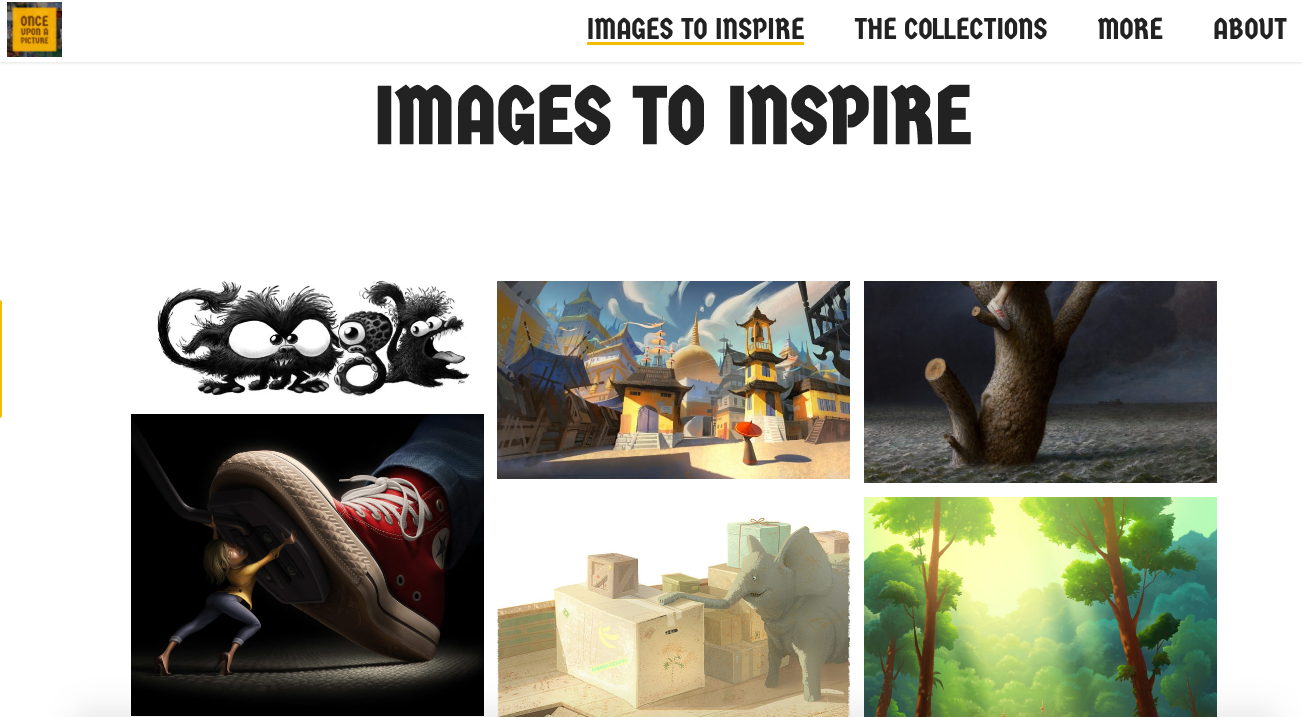
Images to Inspire

We know images have the power to spark creative thinking, but we seldom make the most of this fact when providing writing stimuli for students. Thankfully, this website has you covered! You can view by collection (e.g. Inference collection) or by latest image. All images are shared with permission by the original artist, which is great to model for your students.


Quick Draw

Quickdraw is a project from Google which is using Artificial Intelligence (AI) to recognize drawings.

You can help and have some fun along the way by adding to the world largest doodling data set. It is a quick timed activity so you only have 20 seconds to create each drawing and Google is trying to guess what you are drawing the whole time.

After you have tried 6 drawings, you can see what other people drew in response to the same prompt you had.

May Round Up: The Networked Teacher Learner


Our five-month challenge started here, and now we are lucky to have our first rotation of what Silvia Tolisano refers to as 'Mulling it Over.' 


...an online learning community is a manifestation of connectivism as knowledge is distributed throughout the community of people and devices. A blog would serve as a connectivist tool as it facilitates interaction between peer and social communities of learners, continuity of conversations and allows for anytime, anyplace, anywhere learning (Garcia et al., 2015). Other tenets of connectivism addressed through a blog include the ability to involve external experts, control of the environment by the learner as they make and maintain their own connections, and the shift in the role of the teacher as students become accountable to one another (Garcia, Brown, & Elbeltagi, 2012).From CONNECTIVISM AND BLOGGING by Madeleine Brookes


So before we dig into our first cycle of reading and commenting, please pause and consider the words of the recent student speaker, Kavya, in her address at the Class of 2017 graduation:


"A legacy is not always just about you leave behind, but is also about what other people carry away from you."


With this in mind, here are our first blog-bundles for May.