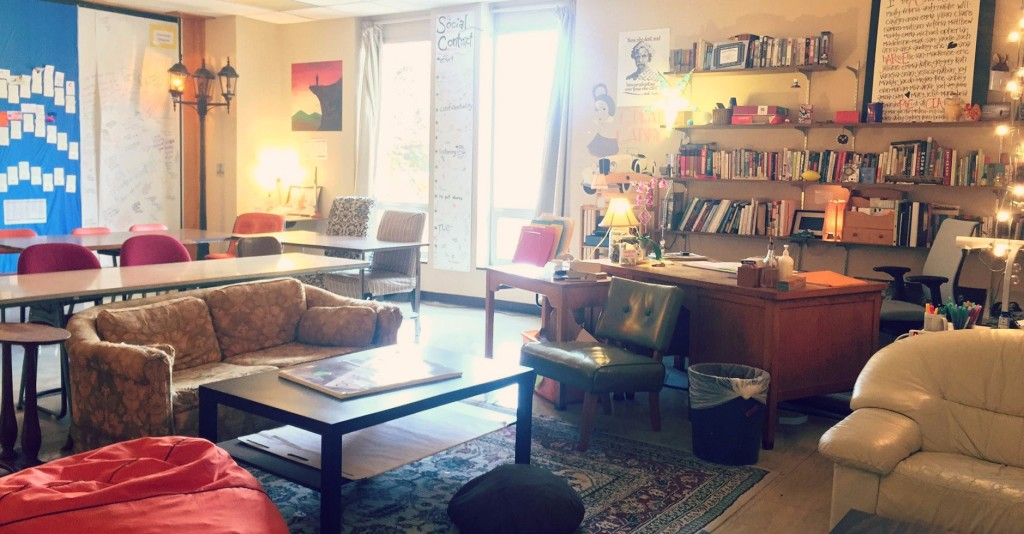
Recharging your batteries over the summer is a good time to being to rethink your classroom design for next year (or to finally catch up on Netflix). To help you prioritize and innovate, here are 30+ resources to get you started (follow the Flipboard to get all the updates as they come):
Learning spaces designed for inquiry do not emphasize a demarcation between teacher and student spaces, have no set “front of the room,” create makerspace-type areas for students to create, tinker, and design, and employ instructional pedagogies that push students to ask questions and seek understanding—not listen to information and regurgitate. The problems of tomorrow will be solved by those students who have such opportunities today." (Full Edutopiaarticle byEric Sheninger, Thomas C. Murray)
We imagined what our portfolios could be four years from now.
As a provocation, we listened to one current university student reflect on her High School blogging experience:
This student has continued to use a portfolio as a tool for learning in university:
“Ultimately, it is my vision that this blog will facilitate and document my journey – and possibly yours, too – in striving to become a better global citizen, life enthusiast, and lifelong learner: stumble, learn, repeat.”
We also listened to Louie, Georgina and Uzay reflect on their portfolio process so far:
We also hosted an optional 90 minute session on Learning Spaces.
We looked at a few key provocations here, here and here to spark conversation, toured recently revamped spaces, and then worked on two classrooms in small teams.
Here's what we managed to accomplish:
Lastly, a group of teachers also learned about the basics of iBooks Author
We explored the possible applications to integrate into that amazing resource and had a wee bit of fun playing with the built in trailer feature on iMovie and the capabilities of PicMonkey.
To discuss any of those sessions further, see your friendly DLC!
We started this journey by hosting consultant Maija Ruokanen (revisit her teachings in this episode of podcast UWCLearn). The DLCs then fanned those fuels as our in house #uwclearn spacebusters. Most recently a cohort of teachers across the college met last Friday to talk about our very first read for the Learning Spaces Book Club.
We started by looking at these questions in school specific teams:
The book club will meet again next August. In the meantime, we will continue to curate resources on this Flipboard.
If you've been following our Flipboard of resources, or you are just curious about having a fresh look at your classroom, this post is for you. Classroom redesign is not something you need to 'go alone.' What if we saw your space as an opportunity to learn together?
What does a collaborative classroom makeover involve?
Click here to learn about our process, and listen to this podcast to push your thinking. Consult a coach today to start your audit. DLCs love to think about the ways our digital and physical spaces can come together. We'd love to think about that with you, so leave a comment here if you'd like us to schedule an appointment to spacebust with you.
"Stay puft marshmellow man" via Flickr by clement127
How to Provide kids Screen Time that Supports Learning
Kids are now spending more time on devices like iPads than watching television. “Children not only need to learn how to decode the letters and words they read, but also to gain an understanding of what goes into creating information and stories of all kinds.” This article talks about the three C’s: Content, Context and Child and the importance of balance.
9 Videos on News Literacy
Our students are increasingly getting their information from videos. How are we supporting them in this form of literacy?
This article examines what you as a teacher can do to help your students be more critical of the videos they watch.
The videos range in topics from how to choose your news to why the news isn’t really the news.
Classroom Eye Candy: A Flexible Seating Paradise
The personal touches in this English classroom make us feel we would like to be a learner in this space. The teacher also shares some excellent tips on how she rotates students through the “best” areas over time. Classroom Eye Candy will be a great inspiration for your flexible learning space.